Understanding the work. Advancing the instruments.
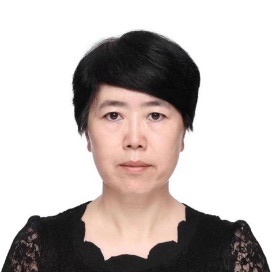
I served as Deputy Chief Engineer at the Luoyang Quality and Technical Supervision Inspection and Testing Center, with overall responsibility for the government institution’s technical work. Fifteen years of hands-on food testing gave me a close understanding of analytical procedures and what laboratory professionals need: accuracy, consistency, and an efficient working day. When I began developing instruments, I carried that perspective with me. Which steps could we simplify? Which details could we improve?
In 2005, I co-founded SONNEN with Tian Wenge. A former senior engineer at an aerospace research institute, he designed automatic control systems for aerospace products. Our backgrounds in food testing and aerospace automation came together around a shared ambition: to turn established analytical methods into dependable automated instruments.
In 2005–2006, I led the successful development of China’s first intelligent, fully automatic Kjeldahl nitrogen analyzer. Our team became the second in the world, after Denmark’s FOSS, to master this technology, placing our work at the international forefront of the field at that time. I also contributed to China’s national standard GB/T 22923–2008 and local standards. That grounding in analytical methods has remained central to my approach to instrument development.
Since its founding, SONNEN has focused on nitrogen, protein, fat, and fiber analysis. We have stayed with this field because I know the work, and because I want laboratory professionals to have instruments we would choose to use ourselves, every day. More than twenty years on, technology continues to evolve. The question guiding us remains the same: what practical difference will it make in the laboratory?
Work with the people who build the instruments.
Tell us the standard you work to — an application engineer replies within 24 hours.